
Bart Simpson vs. the Ralph Loop
AI agents are getting unbelievably good at writing code.
They're also getting unbelievably good at breaking things. You know the pattern: you wake up to a repo that "made progress" by confidently rewriting three subsystems, inventing architecture you didn't ask for, and leaving a trail of TODOs like breadcrumbs.
The culprit is usually context rot. The longer an agent runs, the more it forgets the "why," the constraints, the invisible rules. Critical facts get buried under chat history, and the agent starts filling in gaps with hallucinated assumptions.
This post is about two approaches to that problem:
Ralph Wiggum: a simple loop that keeps going
Bart Simpson: Traycer's smarter orchestration that keeps the big picture intact
Ralph Wiggum: Persistence as a Primitive
The core insight behind Ralph-style loops: don't bet your project on one-shot prompting.
Instead: give the agent a task, let it run, push it back to work if it stops early, and keep iterating until done. Simple, but powerful.
The second key idea: externalize memory instead of bloating the chat. Ralph implementations push state to disk: a task list, a running progress.txt, git history, test outputs. Each iteration "wakes up," scans the repo, reads what it wrote down, and gets back to work. The agent doesn't "remember" by chatting longer. It remembers by reading.
This works remarkably well for well-defined, verifiable, mostly linear tasks: refactors, test coverage expansion, mechanical migrations, "keep going until green."
Where Ralph Breaks Down
Ralph is persistent, not strategic.
On complex builds with cross-dependencies and evolving requirements, it hits predictable failure modes:
Single agent tries too much. One loop can tempt the agent into rewriting everything: huge diffs, unnecessary abstractions, unreviewable commits.
Task breakdown is still required. Without active focus, the agent widens its scope. Ralph isn't a substitute for decomposition.
Tasks need to evolve mid-implementation. Your initial breakdown is never perfect. Hidden constraints and edge cases appear. A rigid loop that blindly executes yesterday's plan amplifies mistakes.
Human-in-the-loop becomes necessary. Some decisions are product decisions. When new requirements appear, a good system needs to pause, surface the conflict, and ask the human to resolve it.
Cross-dependencies break it. Large projects aren't independent tasks. They're DB + API + UI + auth + shared types + shared assumptions. When each iteration is tunnel-visioned to "the next task," it misses the big picture and breaks things in subtle ways.
Enter Bart: The Outer Loop That Stays Smart
Traycer's Bart Simpson mode was built for one thing: large projects where the plan must evolve while the code evolves.
If Ralph is "keep iterating," Bart is:
Observe what's happening across the system
Steer the task graph as reality changes
Verify continuously
Escalate to humans when needed
Bart is an orchestrator, not a worker. It doesn't just re-run an agent and hope. It manages a feedback system across specs, tickets, diffs, verification results, and human decisions.
What Bart Does Differently
Always has the big picture. Bart watches what's been implemented, what's failing, which constraints are violated, which tickets are blocked. It's not tunnel-visioned to a single task.
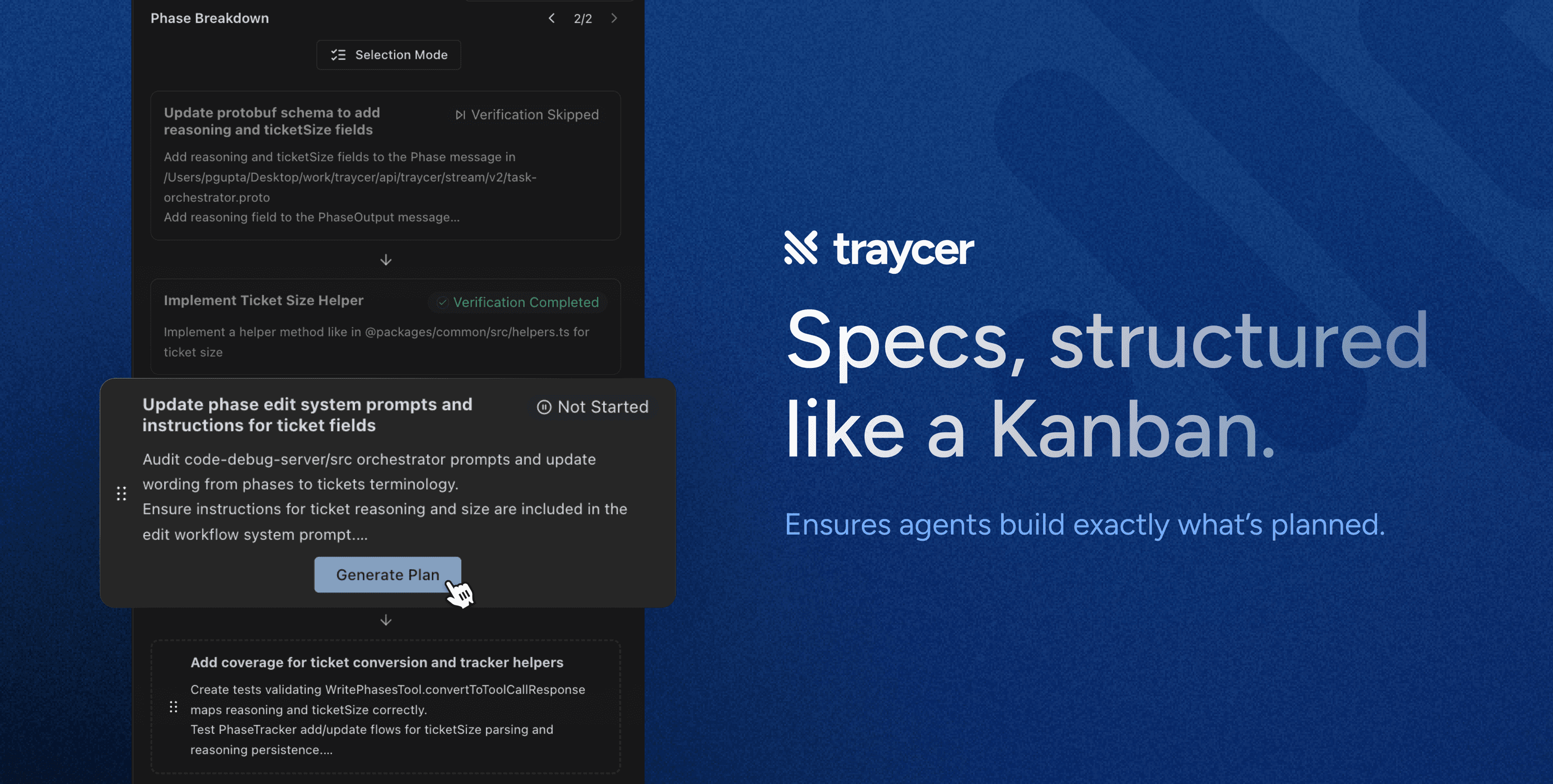
Starts with a breakdown, but keeps steering. Big projects reveal surprises. Bart can split tickets that got too large, merge tickets that shouldn't be separate, reorder tickets when dependencies appear, and update the tech plan or tickets as new information gets revealed.
Escalates when the system can't resolve ambiguity. When implementation conflicts with specs, Bart doesn't hallucinate a new truth. It stops and says: "Here's the mismatch. Here are the options. Pick the constraint." That's how you prevent overnight "progress" from becoming overnight damage.
You can sleep in peace knowing someone smart is in charge.
Try Traycer Today
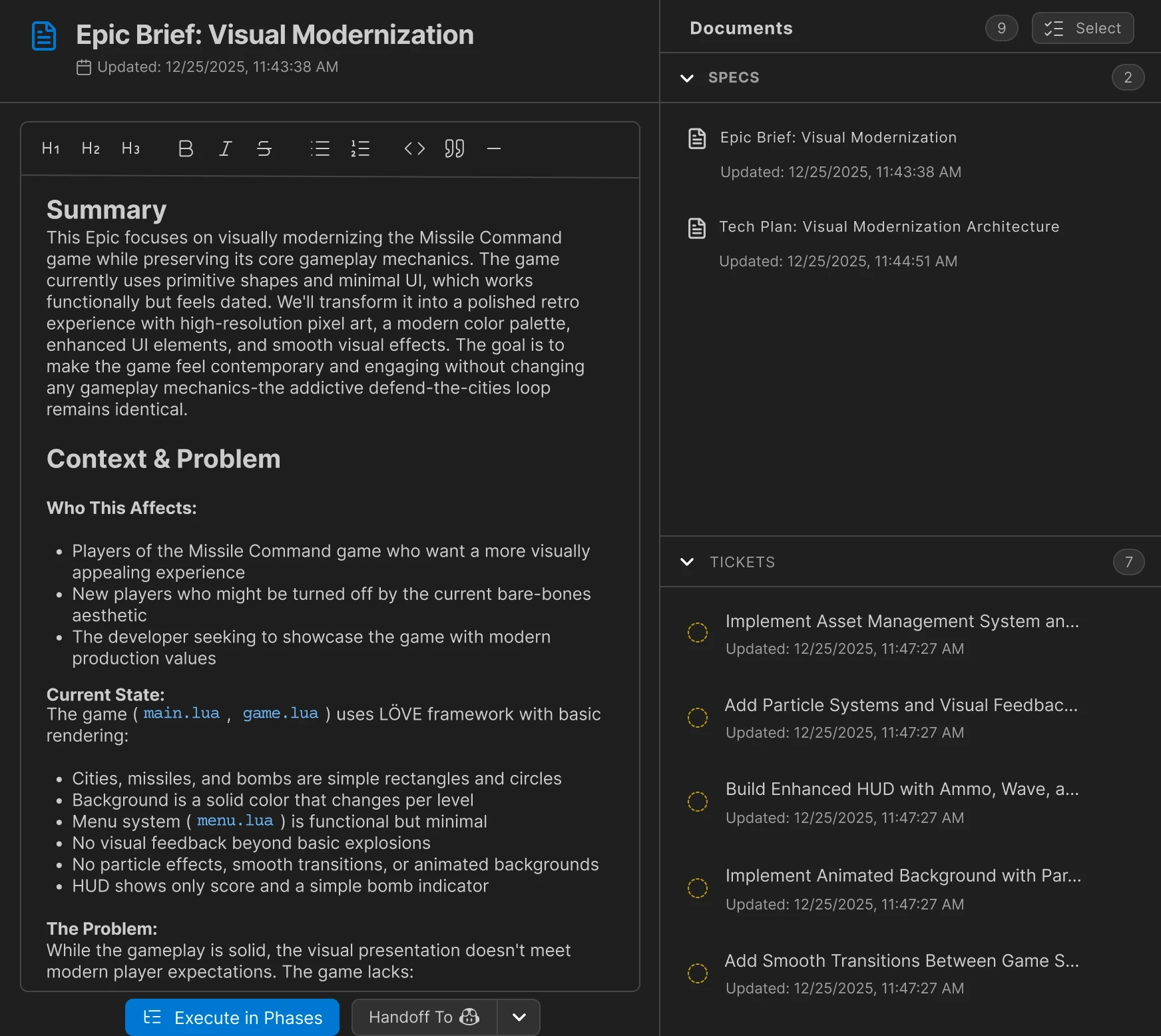
Traycer is built on spec-driven development: mini-specs instead of a single giant PRD, executable tickets with acceptance criteria, verification baked into the workflow, agent-agnostic execution.
With Epic Mode, you get a sophisticated system of specs and tickets that preserves your intent throughout the build. And with Phases Mode, Traycer's YOLO orchestrator executes phases end-to-end with deep-dive planning and verification built into each phase.
Bart Simpson is our next evolution: an outer-loop orchestrator that can observe, steer, and adapt the task graph as implementation progresses. It's currently being dogfooded internally by our team, and we're excited to share more soon.
If you've been experimenting with loops but want something that can build large projects without losing the plot, Traycer is ready to try today.
Update 02/05/2026: Smart YOLO (Bart Simpson Orchestrator) is now available in Traycer!
Disclaimer: "Bart Simpson" and "Ralph Wiggum" are used as playful metaphors. Traycer is not affiliated with The Simpsons or its rights holders.